I’m asking these questions here because it’s pointless to ask it in discord, any inconvenient questions get deleted there. I’ll probably get muted here on the forum after posting this as well, so I want to let the community know that I might not be able to post here anymore.
My first question concerns the TVL. While we have all seen the major partnership announcements, the TVL has not increased for more than six months. Nearly half of the total TVL is attributable to Ether.fi, and they have also begun gradually withdrawing their validators. I would appreciate clarification on this point, as well an outlook regarding potential TVL growth.
My second question is regarding the delisting from Binance. The situation with the token already looks discouraging, and today it has become even worse.
Could you also provide some clarification on this matter?
As an investor who purchased tokens on coinlist, it is disheartening to observe the situation overall. Yes, you mention that the project is new, but you have already been working on it for five years. One could compare this to SSV, which added 92,000 validators over the past year. This leaves me with the question of whether you have already fallen behind in the staking endgame and are now simply trying to pivot with your Obol stack.
Distributed Validators have a longer adoption curve than many short-term speculators will like, and it’s typically only prudent long-term investors who appreciate how this technology gets adopted.
While we haven’t had major headline growth over the last ~8 months, numerous professional node operators and institutions have signaled their intent to upgrade to Distributed Validators. These relationships involve hundreds of millions (and often billions) of dollars in stake, and they move on structured cycles that prioritize security and performance above all else. Over just the past six months, Dinero, Blockdaemon, Liquid Collective, Stakely, Pier Two, and several other large operators and allocators have indicated plans to migrate to Obol Distributed Validators. These all have been communicated on our official blog. In addition, Lido’s Curated Module V2 shows, for the first time, a clear path for Distributed Validators to make up a meaningful share of the stake within Lido, which currently secures roughly $25B in ETH.
I’d recommend reviewing the “Adoption Cycle of Distributed Validators” piece for a zoomed-out view. In addition, read the “2025 Ethereum Institutional Staking Survey” results. These pieces will help you understand that this is a technology that gets adopted over years, not months. Periods of slower growth are normal and healthy. The most important thing is to keep yourself informed, and we do our best to provide consistent updates nearly every single day.
Regarding EtherFi: they are one of our important partners and long-time supporters of Ethereum decentralization, security, and Distributed Validators. We help secure stake within their curated operator set, and we jointly run Operation Solo Staker with them. In regards to their small withdrawals, like most liquid staking protocols, there has been a reduction in their TVL during the past year - they need to exit validators for redemptions - this is normal and healthy market behavior.
On the Binance delisting: while we can’t comment on exchange-specific decisions, delistings do not impact our roadmap, partnerships, or the fundamentals of Distributed Validator adoption. This may dampen short-term speculation, but I don’t believe it’s necessary to optimize for these fair-weather fans.
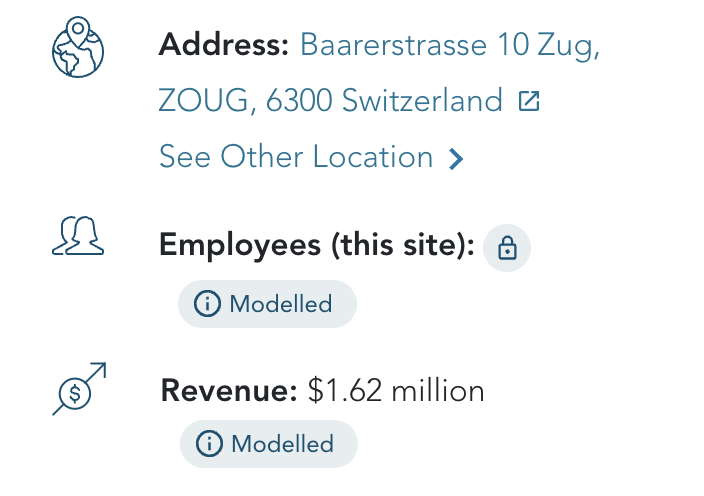
Could you please clarify one more point? I found the financial information for Obol Association showing $1.62M in revenue. Where does this revenue come from? It makes me wonder whether you are indeed partnering with top institutional players, but they might be paying you directly for using your infrastructure, or is that not the case?
Obol is not the first project to have both on-chain and off-chain revenue flows. For example, Chainlink generates both off-chain revenue and on-chain network fees that have only recently started to be converted into its strategic LINK reserve, a model they explicitly describe as combining offchain and onchain income streams to support long-term network sustainability - and even in this case, it’s incredibly opaque and unclear what % of off-chain revenue is actually occurring. We strive to do better at Obol.
Obol is still very early in its adoption cycle, governance maturity and token-economic lifecycle, and we are deliberately prioritizing the adoption of Distributed Validators first, because strong governance and economically sound decisions need to be built on top of durable, real usage rather than speculation.
In regard to fee sharing for token holders, we are closely watching how the broader industry evolves to inform future decisions. As you likely know, even long-established protocols like Uniswap have not enabled their fee switch yet. It’s also generally healthier for early-stage projects to reinvest revenue into growth, product, and ecosystem expansion rather than distributing it as dividends, because the compounding returns from reinvestment typically create far more value than early payout models. Ultimately, these decisions will be made through governance - not by DV Labs, not by the Obol Association, and not by any individual contributor (like myself).
Great, thank you for the clarification. I just wanted to get a clearer picture of your partnerships and the project’s revenue. Am I understanding correctly that not all institutional players are willing to pay the 1% fee in ETH, and some simply pay directly to the company’s account instead?
Please define speculators. How many days or months separate an investor from a speculator? It is unclear who you include in this group.
Eight months of falling asset prices can have a profound impact on a person’s emotional state. Especially if he invested his own funds, and not those raised from outside.
This is the first time I have heard that OBOL will be delisted from Binis Futures.
Listing is carried out through interaction between two parties (the project and the exchange). Delisting is carried out by the exchange based on the actions or inactions of the project.
I would like to hear from the team what the plan was to immediately launch futures after the first hour of trading.
And what are the thoughts and decisions today after half a year of pressure on the price? I fully understand that using leverage when trading futures can significantly increase price pressure. But this pressure can be directed either downwards or upwards.
I think the team knew about it too and had some kind of plan of action.
Generally, I am against the wide spread culture of token speculation in our industry, and do not participate. To me, tokens are more like an investment over long time horizons like years, similar to start up shares (with obvious differences).
But something I still demand from any type of investment is transparency, and here I def see the point by @pumper . Thanks for raising, and some of these facts were new to me as well.
But also the collective did not answer my question, hence I would ask @Leo-ObolAssoc and team to share some clarification real numbers and ideally historical data dashboard in order to avoid further doubts. Thanks!
Thanks everyone for the questions and the interest shown here.
You spoke, we listened. And now we are sharing more regarding the available information to date and also our future plans on this front.